
Is a Silk Pillowcase Worth It? What to Know Before You Buy
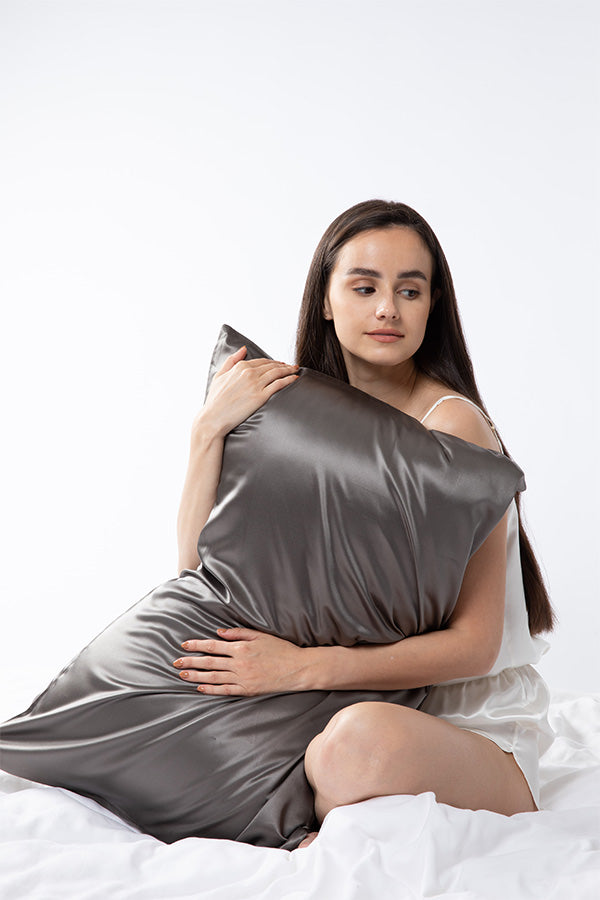
If you have been hovering over a silk pillowcase and wondering whether it is really worth it, you are in good company. The claims online can sound loud. The quieter truth is simpler: a good silk pillowcase is a softer sleep surface. Less friction on skin and hair. Often fewer sleep creases. Often calmer mornings. Quality still decides whether that softness lasts.
This guide is for people who want a clear buying decision, not a miracle story.
At a glance
- Silk's smooth surface can mean less friction against skin and hair overnight
- Momme weight and fibre grade affect how a pillowcase feels and how long it lasts
- "Silky" on a label is not the same as 100% mulberry silk
- OEKO-TEX Standard 100 means the fabric has been tested for a defined list of harmful substances
- A well-made pillowcase, cared for gently, can stay in the rotation for years
1. What a silk pillowcase can (and cannot) do
Silk is not a treatment, and it will not replace skincare or a good hair routine. What many people notice is the feel: hair that tangles a little less, skin that marks a little less from the pillow, and a cooler, softer place to rest your face.
Think of it as part of a nighttime ritual. Consistency matters more than overnight transformation.
Worth knowing: the benefit people talk about most is reduced friction, not guaranteed beauty results.
2. Not every "silk" pillowcase is the same
Some products feel smooth because they are satin woven from polyester. Others use lighter silk that softens nicely at first but wears sooner. A few brands bury the fibre details.
Before you buy, check four things:
- Is it 100% mulberry silk (not a blend, not "silky satin")?
- Is the grade stated (we use Grade 6A)?
- What is the momme weight?
- Is there OEKO-TEX Standard 100 (or equivalent independent testing) mentioned clearly?
If those answers are vague, that is useful information too.
3. Why momme weight matters
Momme is a traditional measure of silk density. Higher momme usually means more silk in the cloth: a richer hand-feel and, often, better longevity for nightly use.
Lighter weights can feel lovely when new. For a pillowcase you plan to use every night, a mid-to-higher weight is usually the more practical choice. We chose 22 momme across our pillowcases because it balances soft drape with everyday durability.
For a deeper comparison, see our guide to 22 momme vs 19 momme silk.
4. Fibre grade, in plain English
Silk is graded by how long, even and fine the filaments are. Grade 6A sits at the top of that scale: long, consistent fibres that sew into a smooth, lustrous cloth.
We use Grade 6A for our pillowcases so the feel stays even from seam to seam. You do not need the jargon to shop well. You do need the grade written clearly on the product page.
5. Silk vs satin (the mix-up that costs people money)
Silk is a natural fibre. Satin is a weave. Satin can be woven from silk, or from polyester and other synthetics.
| Mulberry silk | Polyester satin | |
|---|---|---|
| What it is | Natural protein fibre | Synthetic fibre in a satin weave |
| Feel overnight | Smooth, often cooler | Smooth, can feel warmer |
| Breathability | Generally breathable | Often less so |
| Label check | Look for 100% mulberry silk | "Satin" alone is not enough |
If you are buying for a softer sleep surface, read the fibre line first, then the marketing line.
6. Why prices vary so widely
A £20 "silk" pillowcase and an £80 one can look similar in a flat photo. Price usually tracks:
- Real mulberry silk vs polyester satin
- Momme weight and fibre grade
- Finishing (zips, seams, packaging)
- Care and longevity
Cheaper options can feel fine for a while. A denser, clearly labelled mulberry pillowcase is more often the one that still feels special after many washes, if you follow gentle care.
Useful questions, not slogans:
- Is the fibre named in full?
- Is momme stated?
- Is grade stated?
- Is OEKO-TEX Standard 100 (or similar) mentioned?
- Are care instructions clear?
7. A simple checklist before you buy
- Fibre: 100% mulberry silk, stated plainly.
- Grade: look for Grade 6A if you want the top filament grade.
- Weight: 22 momme is our pick for nightly use.
- Testing: OEKO-TEX Standard 100 for independent chemical screening.
- Details: hidden zip, neat finishing, wash guidance you will actually follow.
Small finishing choices often separate a piece you keep from a piece you replace.
How we approach silk at Silk Works London
Shopping for silk used to feel oddly opaque. Lots of "luxury" language. Fewer clear specs.
We settled on one specification for our pillowcases: 100% mulberry silk, Grade 6A, 22 momme, OEKO-TEX Standard 100. The same silk standard runs through our sleep masks, scrunchies and loungewear. Fewer tiers. Clearer expectations.
Luxury, for us, means choosing pieces you return to each night, not collecting more labels.
So, is a silk pillowcase worth it?
If you only want the lowest price on the page, probably not.
If you want a softer sleep surface, less tug on hair, fewer sleep creases for many people, and a pillowcase that still feels calm after years of careful washing, then a genuine mulberry silk pillowcase is one of the simplest upgrades in the bedroom.
Quality is the deciding factor. Fibre, grade, momme, and honest labelling matter more than a dramatic claim.
You spend a large share of life asleep. A softer place for your face and hair is a quiet kind of care.